I DDoS'd myself (don't do this)
Understanding the Risks of a Distributed Denial of Service (DDoS) Attack
A Warning: Don't Try This at Home!
When it comes to cybersecurity, knowledge is power. In this article, we'll explore what happens when you DOS attack yourself and why you shouldn't attempt this without permission.
What is a DDoS Attack?
A DDoS (Distributed Denial of Service) attack is a type of cyberattack where multiple computers are used to overwhelm or confuse a targeted server. This can be done using various protocols, including ICMP (Internet Control Message Protocol). The goal is to deny service to the target by making it difficult for legitimate users to access the resources.
A Simple Example: Pinging a Server
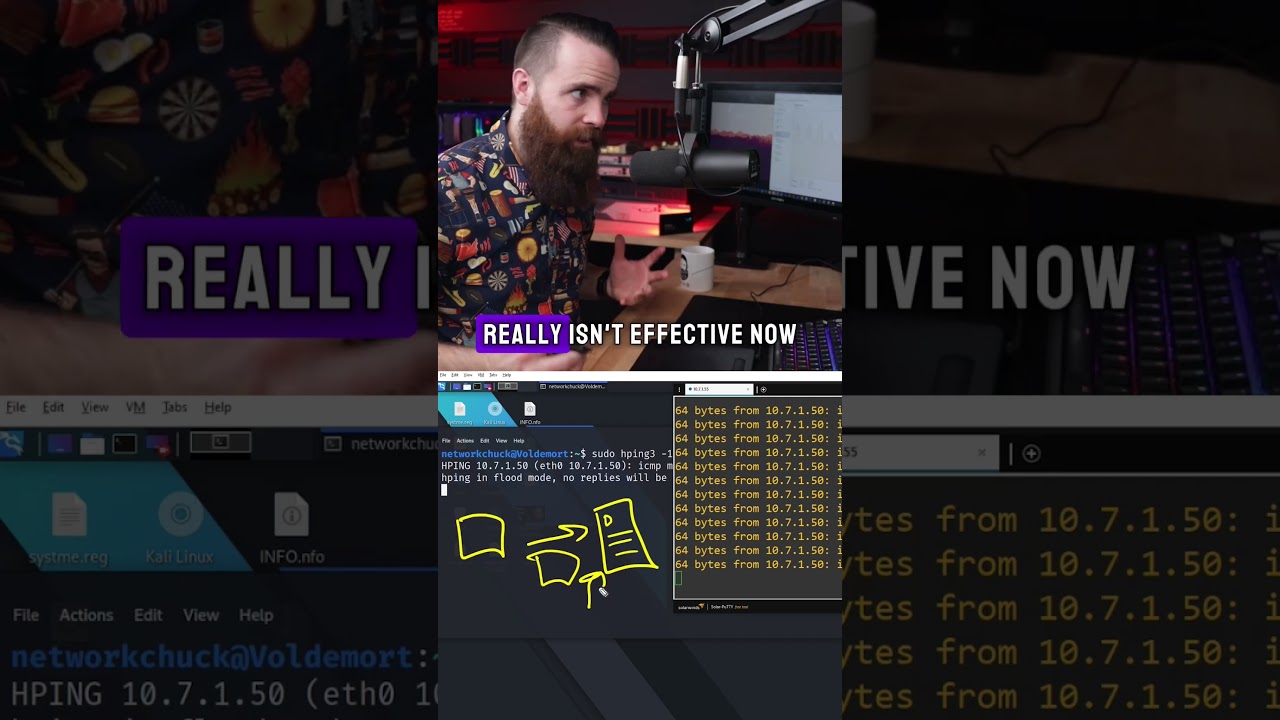
In this example, we'll demonstrate how a simple ping flood attack works. A ping flood attack involves sending a large number of ping requests to the target server in a short amount of time. This can be done using tools like HPing3.
To perform a ping flood attack, I used the following command:

hping3 -1 10.7.1.50
Why Ping Flood Attacks Aren't Effective
In our experiment, we noticed that sending a large number of ping requests didn't overwhelm the server as expected. This is because modern servers have plenty of bandwidth and can handle multiple ping requests simultaneously.
The Power of Distributed Denial of Service
However, when we used multiple computers to send ping requests from different locations, the attack became more effective. We saw a significant increase in latency, which is what makes DDoS attacks so powerful.
Watch this: our attack went from sub-millisecond to 19 milliseconds!
How to Defeat a Ping Flood Attack
The good news is that ping flood attacks are relatively easy to defend against. By turning off ICMP on the server or disabling ping requests, you can prevent an attacker from using this type of DDoS attack.
Conclusion
DDoS attacks may seem like a clever way to overwhelm servers, but they're also easily defeated. As IT professionals, it's essential to understand how these types of attacks work and take steps to protect our systems. Remember: knowledge is power, but permission is key!
Note: Always use DDoS tools responsibly and only with explicit permission from the target server owner.
Want to create posts like this?
This entire article—title, structure, and text—was automatically generated from a video transcript using Matadata.ai.
Stop wasting hours writing show notes and blog posts. Turn your YouTube videos into a content empire in seconds.